10 Investment Fraud Red Flags That Should Make You Walk Away
Learn the 10 warning signs of investment fraud, from unrealistic returns and high-pressure tactics to unusual payment requests and hidden details.

Building wealth takes time. Whether you’re saving for retirement, planning for a major life goal, or looking for ways to grow your money, investing can play an important role in your financial future.
Unfortunately, scammers know that people are looking for opportunities to build wealth. Each year, fraudulent investment schemes cost Americans billions of dollars, leaving many victims with significant financial losses.
The good news is that many investment scams share common warning signs. Knowing what to look for can help you protect your savings and make more informed financial decisions.
Why Investment Fraud Works
Investment fraud often succeeds by appealing to emotions rather than logic. Fraudsters may create a sense of urgency, promise financial security, or make investors feel they’re being offered a special opportunity that few others have access to.
Scammers frequently present themselves as experts and use convincing language to gain trust. Taking time to research any opportunity and ask questions can help uncover concerns before money changes hands.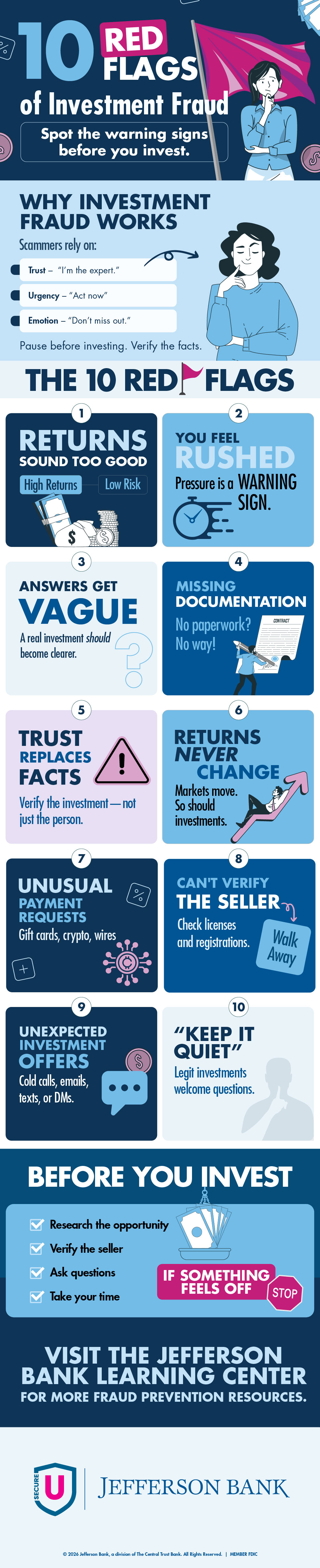
The 10 Warning Signs of Investment Fraud
1. The Returns Sound Better Than Anything Else You’ve Seen
Most investors understand there’s a relationship between risk and reward. If someone promises unusually high returns with little or no downside, that’s often the first sign something deserves a closer look.
Ask yourself: How are these returns being generated, and what risks are involved?
2. You Feel Rushed to Make a Decision
Pressure is one of the most common tools used in investment scams.
Statements like:
- “The opportunity closes this week.”
- “We’re only accepting a few more investors.”
- “You’ll miss out if you wait.”
are designed to create urgency rather than encourage thoughtful decision-making.
Ask yourself: Would this opportunity still make sense if I took a week to research it?
3. The Explanation Gets Vague When You Ask Questions
A legitimate investment should become clearer the more questions you ask. Fraudulent opportunities often become murkier.
Ask yourself: Do I truly understand how this investment makes money?
4. The Investment Isn’t Properly Documented
Professional investment opportunities typically include disclosures, agreements, account statements, and other supporting documentation. Missing paperwork should never be ignored.
Ask yourself: Would I feel comfortable investing if this documentation didn’t exist?
5. You’re Being Asked to Trust a Person Instead of the Facts
Many scams begin with trust.
The salesperson may be charismatic, successful, well-connected, or recommended by someone you know.
Trust matters, but verification matters more.
6. The Investment Seems Immune to Market Conditions
No investment rises forever. When an opportunity appears unaffected by interest rates, economic downturns, market volatility, or industry challenges, it’s worth taking a closer look.
Ask yourself: Why can’t payment be handled through normal investment channels?
7. You’re Asked to Send Money in Unusual Ways
Wire transfers, cryptocurrency transactions, prepaid cards, and payments sent directly to individuals deserve extra scrutiny.
Ask yourself: Why can’t payment be handled through normal investment channels?
8. You Can’t Easily Verify the Seller
Investors should be able to independently verify licenses, registrations, and professional backgrounds.
Ask yourself: What information can I confirm without relying on the salesperson?
9. The Opportunity Arrived Out of Nowhere
Unexpected investment opportunities often deserve skepticism.
Cold calls, direct messages, unsolicited emails, and social media pitches are common starting points for scams.
Ask yourself: Would I have pursued this investment if someone hadn’t approached me first?
10. You’re Encouraged to Keep It Quiet
One of the biggest red flags is being discouraged from seeking outside advice.
A legitimate investment can withstand questions from a spouse, accountant, attorney, or financial advisor.
Ask yourself: Why would anyone object to me getting a second opinion?
The Best Defense Against Investment Fraud
You don’t need to be an investment expert to avoid most scams.
Protecting your finances starts with staying informed. The more you understand about common scams, investment risks, and fraud prevention strategies, the better prepared you’ll be to make confident decisions. Visit Jefferson Bank’s Learning Center for more tools and insights designed to help you navigate your financial journey with confidence.